
Suffering and Human Empathy
The FriendThis flow traces how the Narrator’s encounters with animal suffering challenge human ideas about innocence, loyalty, and moral responsibility.
increasing Bearing strength in each event
 decreasing
Bearing strength in each eventdecreasingA Dog Among Belongings
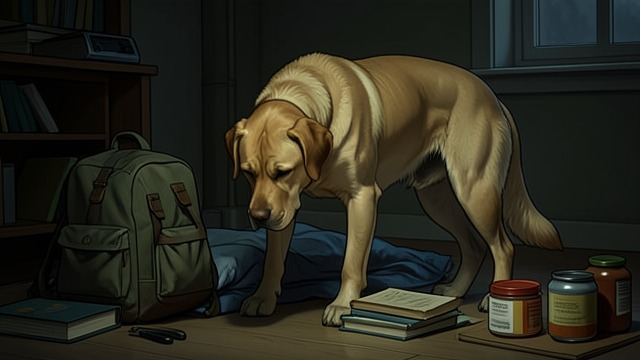
A Dog Among Belongings
Absence made visible
The Narrator sees a dog beside a backpack, books, bedding, and food containers, with no person nearby. The human absence makes the scene more poignant than the objects themselves.
Vulnerability in public
The image invites questions about dependence and abandonment. It also prepares the Narrator to notice how quickly human hardship can leave an animal exposed to forces it cannot control.
The Duck and the War
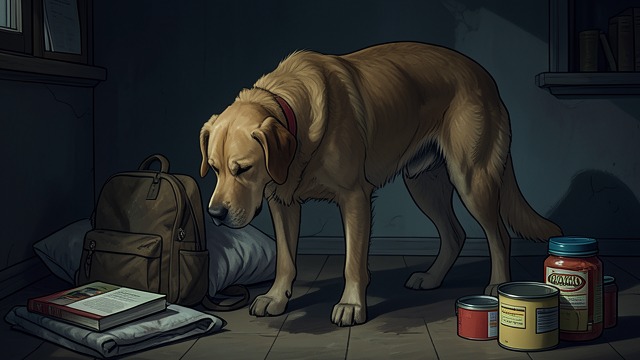
The Duck and the War
A remembered cruelty
Louis Zamperini remains haunted by a guard torturing a duck during his captivity in Japan. Robert Graves recalls the dead horses and mules of the Somme as especially shocking.
Pity for the powerless
These memories suggest that animal suffering can become unbearable because the animal cannot understand the reason for its pain. The Narrator connects that pity to a remembered human vulnerability.
The Human Debt
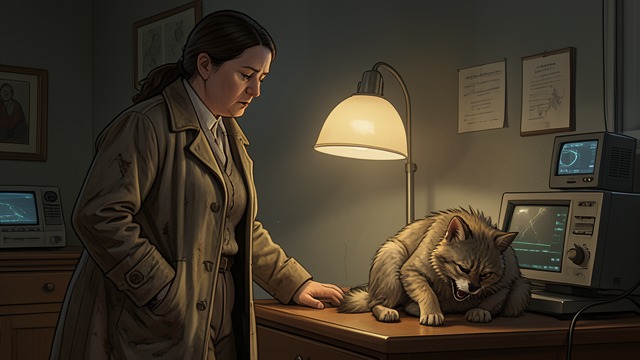
The Human Debt
Dependence and innocence
The Narrator believes people retain a memory of early helplessness and fear. Animals seem to remain within that state, making cruelty to them feel like an assault on innocence.
A moral warning
She rejects the idea that concern for animals must be misanthropic. Losing the capacity to feel such pity, she fears, would make violence easier to accept for every living being.
The Unwanted Dogs
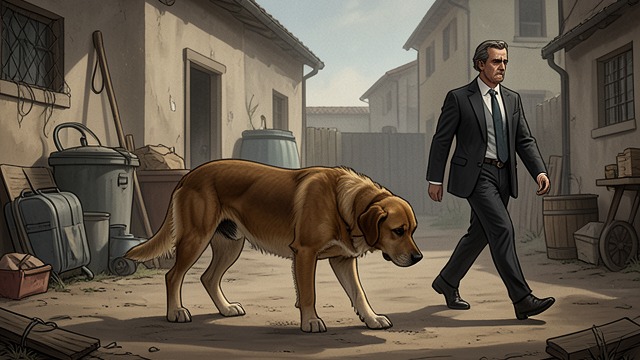
The Unwanted Dogs
Human power decides
In J. M. Coetzee’s Disgrace, dogs are treated as things despite their trust in people. The Narrator returns to the question of why David Lurie cannot save one particular dog.
One animal and many
The desire to save a single creature confronts the scale of abandonment and killing. The difficulty of rescue does not make the individual animal’s fate less morally significant.
Apollo’s Care

Apollo’s Care
A choice to protect
The Narrator guards Apollo from traffic, accommodates his age, and stays near him when he is distressed. These small acts answer human power with practical responsibility.
Empathy without certainty
She cannot know exactly what Apollo feels, but does not treat that ignorance as a reason to dismiss his suffering. The bond turns compassion into repeated attention rather than abstract sentiment.
During the Narrator’s street observations
During the Narrator’s reading about animal suffering
After these reflections on animal pain
During the discussion of unwanted animals
During the Narrator and Apollo’s shared life
